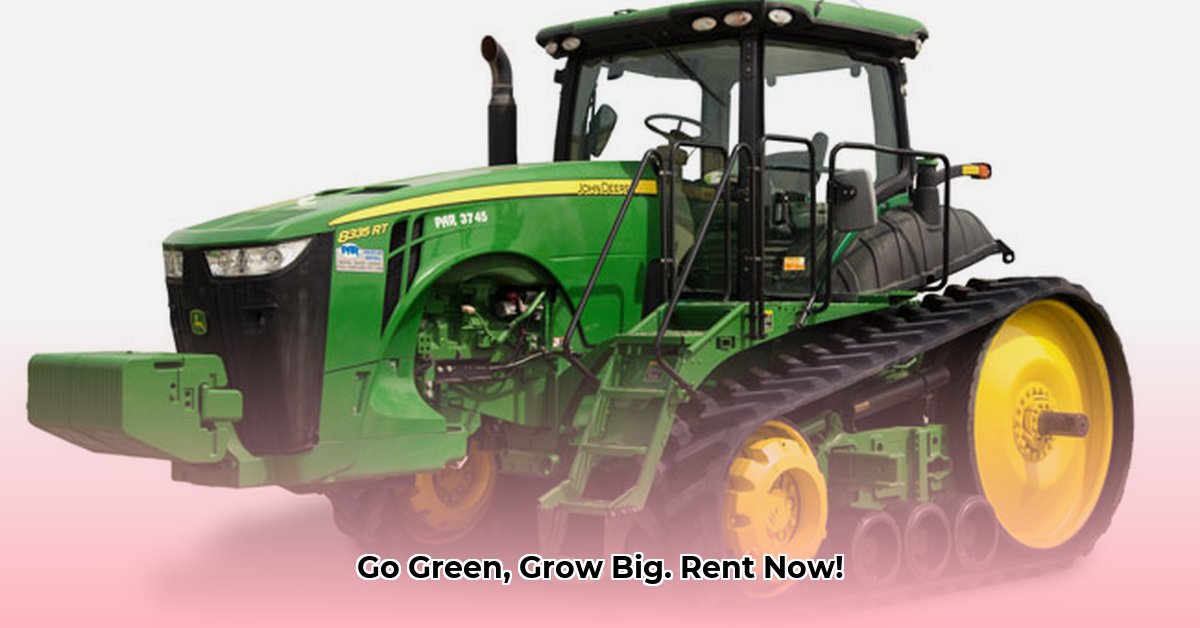
Farming is becoming increasingly expensive, and the high cost of farm equipment can be a significant hurdle, especially for smaller farms or those focused on sustainable practices. However, renting farm tractors offers a surprisingly effective solution, combining cost savings with environmental responsibility. For detailed cost analysis, see this helpful tractor leasing cost guide. This comprehensive guide will equip you with the knowledge to navigate the world of tractor rentals, enabling you to optimize your farm's efficiency and sustainability.
The Advantages of Renting Farm Tractors
Owning a tractor represents a substantial financial and maintenance commitment. Renting, on the other hand, offers several key benefits perfectly aligned with the goals of sustainable agriculture.
Significant Cost Savings: Renting eliminates the substantial upfront purchase cost and avoids the need for large loans, freeing up capital for other crucial farm investments such as seeds, fertilizers, or operational expansion. Isn't this a smarter way to manage your resources and grow your business sustainably?
Simplified Maintenance: Rental agreements typically cover routine maintenance, removing the burden of unexpected repairs and associated expenses, allowing you to focus on your core business functions.
Access to Specialized Equipment: Renting allows access to a broader range of specialized equipment tailored to specific tasks or crop types, fostering greater flexibility and adaptation to evolving needs. This is extremely valuable for smaller farms or farmers experimenting with various sustainable methods.
Flexibility and Adaptability: The ability to scale your equipment needs up or down as required, based on seasonal demands or changes in farming practices, offers a significant advantage, particularly crucial for smaller operations or those adopting new methods. This adaptability is a hallmark of sustainable farming.
Types of Farm Tractors Available for Rent
Farm tractors are categorized by size, horsepower, and suitability for different tasks. Choosing the right tractor is paramount to operational efficiency.
Compact Tractors: Ideal for smaller farms or specialized tasks requiring maneuverability in confined spaces, such as orchards or vineyards.
Utility Tractors: Versatile machines suitable for a wide range of tasks on medium-sized farms, including plowing, planting, and hauling.
High-Clearance Tractors: Specifically designed for row crop farming, offering increased ground clearance to navigate taller crops without causing damage.
Understanding the Power Take-Off (PTO): The PTO shaft is a critical component, serving as the power source for various attachments that significantly expand a tractor's functionality. Think of it as your tractor's power outlet.
Common Attachments: Numerous attachments enhance tractors' versatility. These include:
- Tillers: Prepare the soil for planting.
- Mowers: Maintain pastures and hay fields.
- Loaders: Move materials and assist with various farm tasks.
(Figure 1: Images of Different Tractor Types)
(Insert images here showing compact, utility, and high-clearance tractors)
Selecting the Right Tractor: A Step-by-Step Guide
Choosing the right rental tractor requires careful planning. This step-by-step guide will help you make an informed decision:
Step 1: Assess Your Farm's Needs:
- Acreage: Larger farms require more powerful tractors.
- Soil Type: Heavy clay soil needs more robust tractors than lighter sandy soil.
- Crop Types: Different crops necessitate specific equipment requirements.
Step 2: Define Your Tasks: List all tasks the tractor will perform. This dictates the necessary attachments and horsepower requirements.
Step 3: Determine Your Budget: Rental costs vary significantly. Establishing a budget early narrows down your options.
Step 4: Identify Necessary Attachments: List the attachments needed to complete identified tasks. This impacts both rental cost and tractor specifications.
Step 5: Review the Rental Agreement: Thoroughly review the agreement, paying close attention to insurance, maintenance, and damage liability.
Finding and Selecting a Rental Provider
Several reputable companies specialize in farm equipment rentals. Research and compare based on these factors:
| Rental Provider | Strengths | Potential Drawbacks |
|---|---|---|
| United Rentals | Extensive selection, broad geographical reach | Pricing can vary significantly by location |
| Sunbelt Rentals | Competitive pricing in certain regions, strong customer service | Availability might be limited in remote areas |
| [Local Provider Name]: | [Strengths specific to this company] | [Drawbacks specific to this company] |
Always obtain quotes from multiple providers and negotiate terms. Prioritize insurance coverage, maintenance agreements, and clear contract terms.
Sustainability and Tractor Rentals: An Eco-Conscious Approach
Sustainable agriculture extends beyond crop choices. Equipment efficiency plays a pivotal role in minimizing environmental impact:
Fuel Efficiency: Prioritize fuel-efficient tractors to reduce your carbon footprint and fuel expenses. Is this not a crucial element of sustainable agriculture?
Reduced Material Consumption: Renting minimizes the overall resource consumption associated with equipment ownership.
Environmental Initiatives: Support companies actively promoting sustainable practices. This aligns your farm's operations with responsible environmental stewardship.
Long-Term Considerations: Rent vs. Buy
The decision of renting versus buying involves a thorough cost-benefit analysis, weighing:
Total Cost of Ownership: Compare the cumulative cost of renting versus the purchase price, maintenance, repairs, fuel, and eventual resale value (or scrap value) of buying over a defined period.
Technological Advancements: Renting allows access to the latest technology without long-term financial commitment. However, continuous technological updates may necessitate frequent changes in rental equipment.
Conclusion: Embracing Sustainable Farming Practices
Renting farm tractors provides a flexible, affordable, and environmentally sound approach to modern agriculture, enabling farmers of all sizes to access the necessary equipment for efficient and sustainable operations. Explore your rental options today and contribute to a more sustainable farming future.